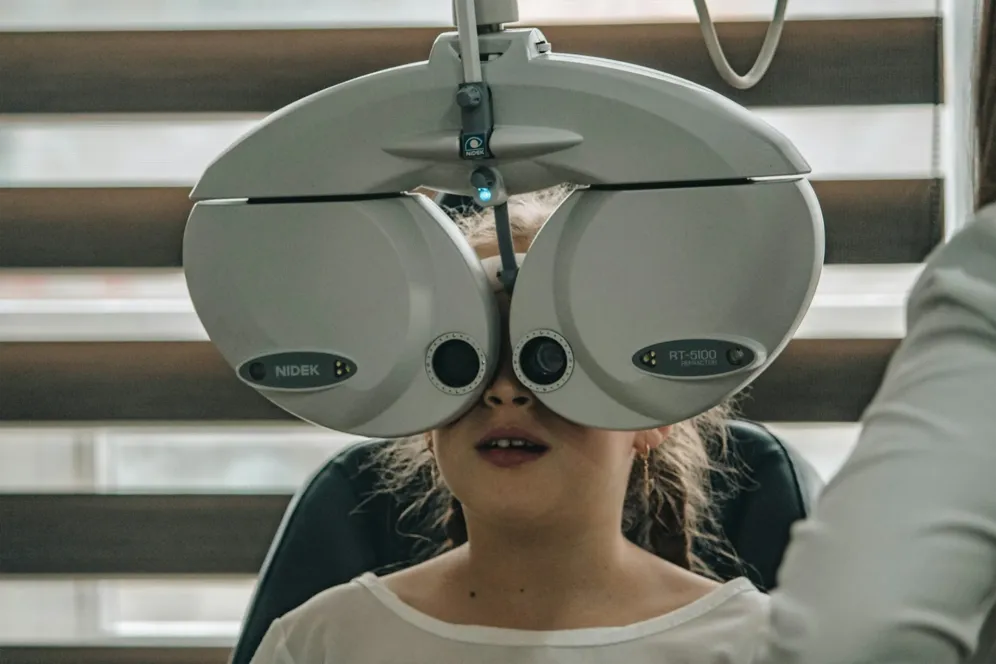
Children don't always realise they have a sight problem, or can't accurately describe their symptoms, so routine check ups can identify any issues and help us intervene early.
In the long term, getting your child in the habit of regular eye exams is the best way to ensure their vision stays healthy throughout their life.
All children 16 and under, or those under 19 and still in full time education, qualify for free NHS eye tests.
When Should I Get My Child's Vision Tested?
All children should have their eyes examined as part of their regular development checks when they are 6 months of age, and at age 3. These basic checks are usually done by a doctor or health visitor, who may recommend you see an optician for a more detailed check up. If there are no concerns, children should see an optician around the time they start school. The majority of teaching uses visual information, so even minor problems with their sight can really impact their progress. Our opticians can prescribe and fit child-friendly glasses that will ensure your child can achieve their potential.
Children without vision problems or risk factors for eye or vision problems should then continue to have their eyes examined at least every two years throughout school.
Children with existing vision problems or risk factors should have their eyes examined more frequently. Common risk factors for vision problems include:
- Premature birth
- Developmental delays
- Turn in the eye or squint
- Family history of eye disease
- History of eye injury
- Other physical illness or disease
Signs to Watch Out For
Children may not realise they have a problem with their eyes, as they simply don't know that what they are experiencing is unusual. If your child regularly shows any of the following symptoms, it's a good idea to get their vision tested:
- Eyes pointing in different directions or not moving together.
- Headaches or eye strain, especially after reading or schoolwork.
- Holding books or toys too close to their face.
- Rubbing their eyes a lot or saying their eyes feel tired.
- Sitting close to the tv or wanting to sit at the front of class to read the board.
- Difficulties with reading or writing, especially if they seem to do well in other areas at school.
- Closing one eye, tilting their head or squinting to see better.
- Being very clumsy or having poor hand-eye coordination for their age (such as struggling to play with a ball)
If you suspect your child might have a problem with their eyesight, then make an appointment as soon as possible.
What to Expect at a Eye Exam
We try to make children's appointments as relaxed and fun as possible, while still getting accurate and effective test results. The tests are straightforward to complete and non-invasive. You'll be able to sit with your child throughout the process, and it's ok to bring a favourite teddy or comforter if they might be nervous.
Here's some of the tests your child might be asked to complete:
- None of the tests require us to touch your child's eye itself. We might gently touch their eyelids to hold them out of the way when we examine the surface of their eyes.
- Older children will be asked to read different sized letters displayed on the wall, while we can use symbols or shapes for pre-school children. This tests how their vision works over long distances.
- A similar test reading letters or symbols on a page held by the child can help us identify any problems with close up vision.
- We'll look closely at your child's eyes while asking them to look at objects in different places around the room. This shows us if their eye muscles work well and both eyes move smoothly together.
- We can use a special microscope with a light to look inside the eye to check the blood vessels and nerves. This can feel a bit odd due to the bright light but doesn't hurt.
- If we detect the need for glasses, we'll try out which lenses work best using a special pair of glasses with interchangeable lenses. We can switch these round and try different combinations to find the right prescription for each eye.
Visual Stress and Education

Some children experience difficulties with reading and schoolwork due to Visual Stress. This is where the contrast between the white page and the dark text creates an unpleasant strobe-like effect. Visual Stress can also be a factor for children diagnosed with dyslexia or other learning difficulties.
If your child complains that the words are moving around the page or that the letters are blurred, these are clues that Visual Stress might be a problem for them. Other common symptoms include frequent headaches, reading the same words twice or losing their place on the page often.
Fortunately, reducing the contrast with low-cost coloured acetate overlays often makes reading much more pleasant and straightforward, meaning your child can concentrate fully on their schoolwork. We are able to evaluate symptoms of Visual Stress in children and an intuitive overlay assessment can be carried out to identify the most effective colour for your child.
If you or your child's teacher have any concerns about how their vision may be affecting their education, please get in touch with us to book an appointment.